Guides · Insulation, roofing and fitting out
Heating a log cabin: electric heaters, fixed heating and wood burners
How to heat a UK garden log cabin: insulate first, then choose a portable oil-filled radiator, a convector, fixed electric heating or a professionally fitted wood burner.
We haven't tested these products. This comparison is based on makers' published specifications and manuals, retailer listings and owner reviews (checked 15 November 2026).
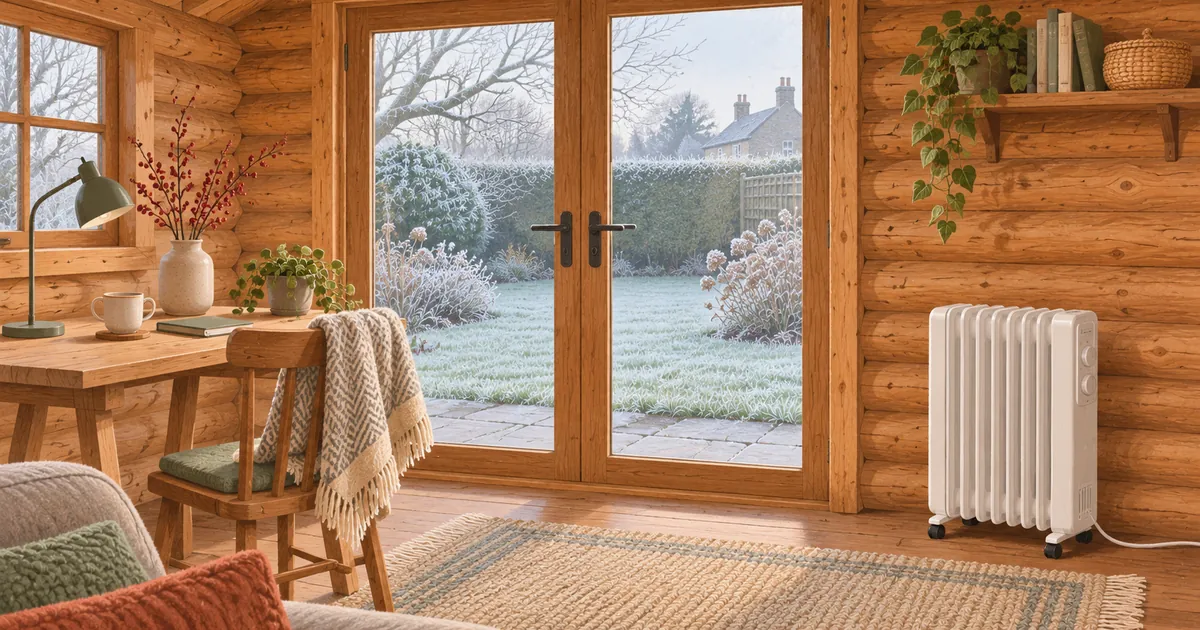
A log cabin is a timber box sitting in the garden, exposed on every side. How warm it stays depends far more on its walls, roof, floor and glazing than on the heater you put in it. This guide covers the order to do things in: keep the heat in, then choose a heat source that matches how often you use the cabin, and leave anything wired-in or flued to qualified installers.
Start with insulation, not a bigger heater
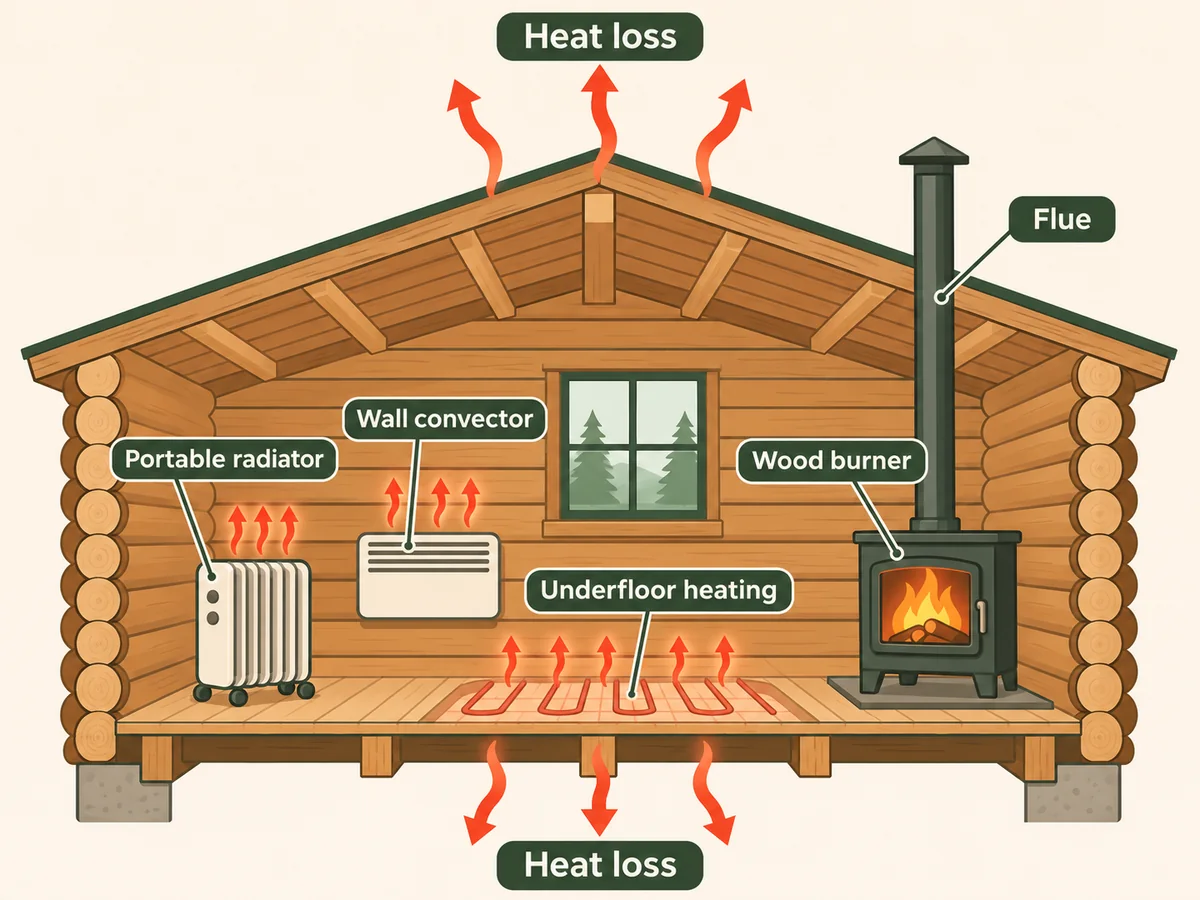
Dunster House makes the point plainly in its log cabin maintenance guide: even a cabin with thick walls can lose a lot of heat through a thinner roof and floor, and insulating the roof and floor is the best route to keeping heat in. The same page mentions underfloor heating as an option for warmth in winter.
Wall thickness matters too. Tiger Sheds' buyer's guide describes 28 mm cabins as usable all year in mild climates but best suited to spring, summer and autumn, and 44 mm cabins as suitable for all seasons. If you have not bought yet, read log cabin wall thickness and log cabin insulation kits before you budget for heating, because a well-insulated cabin needs a smaller heater and runs it for less time.
Match the heater to how you use the cabin
Dunster House's buyer's guide suggests that if you only use a cabin occasionally, a small electric heater switched on about 20 minutes before you go in is enough to take the chill off. For year-round use, such as a home office, it points to thicker or insulated walls rather than more heat.
| How you use it | Typical approach | Who installs |
|---|---|---|
| A few hours at weekends | Portable plug-in heater on an existing socket in the cabin | You, following the maker's manual |
| Daily home office | Insulated cabin plus a thermostatically controlled heater; fixed panel heaters are an option | A registered electrician for any new circuit |
| All-day, all-year use | Insulated floor, roof and walls; fixed electric heating or underfloor heating | Registered electrician; flooring specialist |
| A real fire for atmosphere | Wood-burning stove with a flue | HETAS-registered installer or building control approval |
Portable electric heaters
Portable heaters are the simplest option, provided the cabin already has a properly installed power supply. They plug into a socket, so there is no extra wiring, but they still put a heavy load on the circuit and should never be run from a cable trailed from the house. See log cabin electrics for why a cabin supply is a job for a registered electrician.
Oil-filled radiators
An oil-filled radiator warms up slowly and gives off steady, fan-free heat. As an example of what is on the market, the STATUS 9-Fin Oil-Filled Radiator 2000W listing describes three power settings (800 W, 1,200 W and 2,000 W), an adjustable thermostat, a tip-over switch, an overheat sensor and castors. The listing claims it heats spaces up to 20 m²; treat room-size figures as the seller's claim, because the real result depends on how well your cabin is insulated.
Convector heaters
A convector heats the air directly and tends to respond faster than an oil-filled radiator. The Dimplex HeatLite Convector Heater, 2kW listing describes three heat settings, an adjustable thermostat, overheat protection and tilt shut-off, and again claims rooms up to 20 m². That figure is the maker's claim, not a measurement in a timber cabin.
Using any portable heater safely
Read the maker's manual before first use and follow its clearances. Keep heaters away from curtains, furniture, paperwork and the log walls themselves, never cover them, and do not leave them running unattended or overnight unless the manual says the model is designed for that. Plug directly into a wall socket, not an extension lead, unless the manual allows it.
Fixed electric heating
If the cabin is a daily workspace, wall-mounted panel heaters on a timer or thermostat, or electric underfloor heating, are tidier than a portable heater. Both need fixed wiring. The Planning Portal's electrics building regulations page says that in England a new circuit connected to the consumer unit is notifiable work, and recommends an electrician registered with a competent person scheme, who can self-certify the work. Wales has wider notification rules that include work outdoors. Scotland and Northern Ireland have their own systems, so ask your council's building standards or building control team.
Plan heating at the same time as the cabin's electrics. The electrician needs to know the total load you intend to run (heater, computer, lights, perhaps a kettle) to size the supply cable and protective devices.
Wood-burning stoves
A stove in a timber building is the option most likely to go wrong, and the one where professional input matters most. The Planning Portal's page on flue building regulations says that if you install a flue, building regulations apply, ventilation and general safety must be taken into account, and installation should be carried out by a suitably qualified installer.
HETAS describes itself as the competent person scheme specialising in the installation of solid fuel and biomass appliances, with a search to find registered installers. A HETAS-registered installer can self-certify that the installation complies; otherwise you need building control approval.
A log cabin is built from combustible timber. Clearances to the walls, a non-combustible hearth, the flue route through the roof, ventilation and a carbon monoxide alarm are all decisions for a registered installer and building control, not something to improvise. Also check with your insurer and your cabin maker before ordering a stove: some cabin warranties or insurance policies may be affected.
A flue on an outbuilding can also have planning implications, so check with your council if in doubt. If you are choosing between stove types and sizes, our sister site Logcroft has a stove buying guide covering what to look for in an appliance.
Condensation and damp
Heating a cold timber room can create condensation, especially on glazing on winter mornings. Dunster House's maintenance guide recommends opening windows on dry days or when they steam up to help prevent damp from condensation. A cabin that is heated briefly and then left cold is more prone to this than one held at a steady low temperature.
If you suspect damp in the floor or walls, a pin-type meter such as the Brennenstuhl Moisture Detector MD gives a reading of surface moisture; its listing gives a range of 5 to 50% for wood. Readings vary with timber species and conditions, so use it to compare spots over time rather than as a pass or fail.
Running costs
Running cost depends on the heater's power, how many hours it runs, your electricity tariff and, above all, how much heat escapes. We have not given a cost per hour here because tariffs vary and change; multiply the heater's wattage in kilowatts by the hours used and by your own unit rate from your bill for a rough figure. A thermostat and a timer stop a heater running flat out when the cabin is already warm.
Summary
- Insulate the roof and floor first; Dunster House identifies these as the main heat-loss routes in an otherwise solid cabin.
- For occasional use, a portable heater switched on a little before you go in is often enough.
- For daily use, plan fixed electric heating with a registered electrician as part of the cabin's supply.
- A wood burner needs a qualified installer, ideally HETAS-registered, and building regulations apply to the flue.
- Room-size claims on heater listings are the seller's figures, not a guarantee in a timber building.
For the bigger picture on setting a cabin up as a workspace, see best log cabins for a home office.
Sources
Opened and checked on 15 November 2026.
- dunsterhouse.co.uk/help-centre/how-to-maintain-your-garden-log-cabin
- dunsterhouse.co.uk/log-cabins-buyers-guide
- www.tigersheds.com/buying-guides/a-buyers-guide-for-choosing-a-log-cabin
- www.planningportal.co.uk/permission/common-projects/electrics/building-regulations
- www.planningportal.co.uk/permission/common-projects/flue-chimney-or-soil-and-vent-pipe/building-regulations
- www.hetas.co.uk
- logcroft.co.uk/choosing/stove-buying-guide