Guides · Insulation, roofing and fitting out
Log cabin electrics: Part P, registered electricians and what to ask for
Getting power to a garden log cabin in the UK: why it is notifiable work, who can certify it, the certificates you should get and how to fit electrics around settling logs.
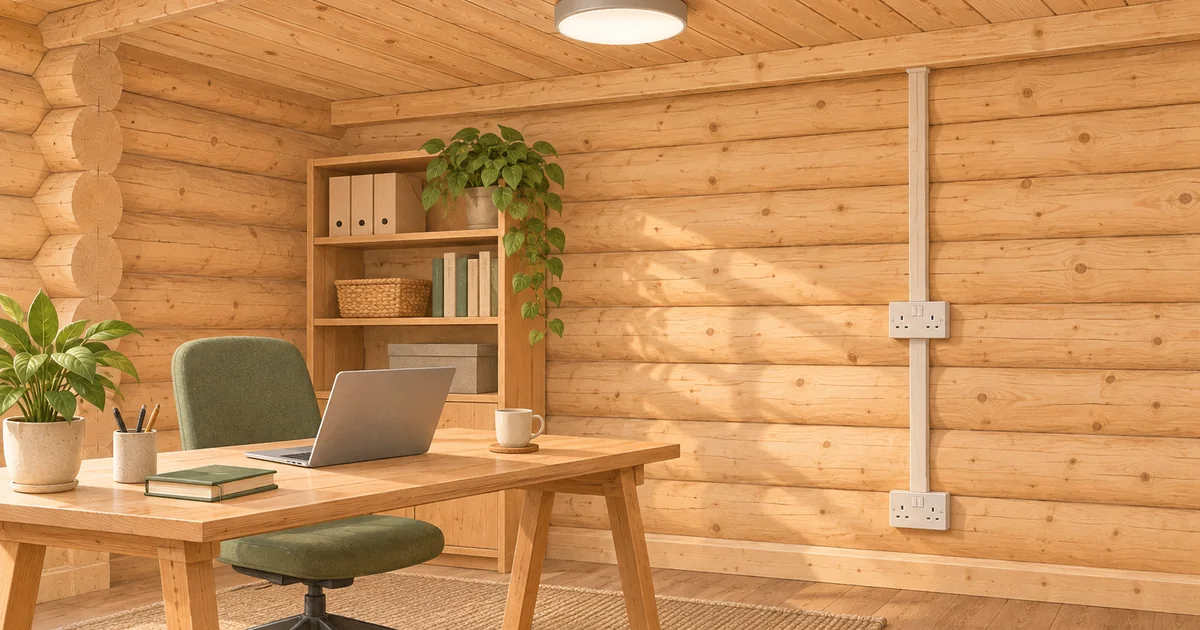
A log cabin without power is a summerhouse. Lights, sockets, a heater and a broadband router are what turn it into an office, gym or studio, and they are also the part of the project with the most safety risk. This guide explains the rules for electrical work in a garden building, who can do it and what paperwork you should end up with. It deliberately does not tell you how to wire anything: that is a job for a qualified electrician.
Mains electricity outdoors can kill. The supply to a garden building runs through the ground, into a timber structure that moves with the seasons, and often feeds heaters. Use a qualified, registered electrician and follow the manufacturer's instructions for any appliance.
Do the building regulations apply to a cabin's electrics?
Yes. The Planning Portal's electrics building regulations page says that if you carry out electrical installation work in your home or garden in England and Wales you must comply with the building regulations, and that this includes work in a garden, garage, shed or other storage building. This applies even when the cabin itself is small enough to be outside the building regulations' floor area rules (see log cabin building regulations).
The practical guidance is Approved Document P, published on GOV.UK, and all electrical work should follow BS 7671, the wiring regulations.
Is it notifiable work?
Some electrical work is "notifiable", meaning it has to be certified by a registered person or checked by building control. According to the Planning Portal, in England notifiable work is:
- the installation of a new or replacement consumer unit (fuse box)
- the installation of a complete new circuit connected to the consumer unit
- alterations in and around a bath or shower.
In Wales the rules are wider: alterations to existing circuits are notifiable in "special locations", which in Wales include kitchens and outdoors.
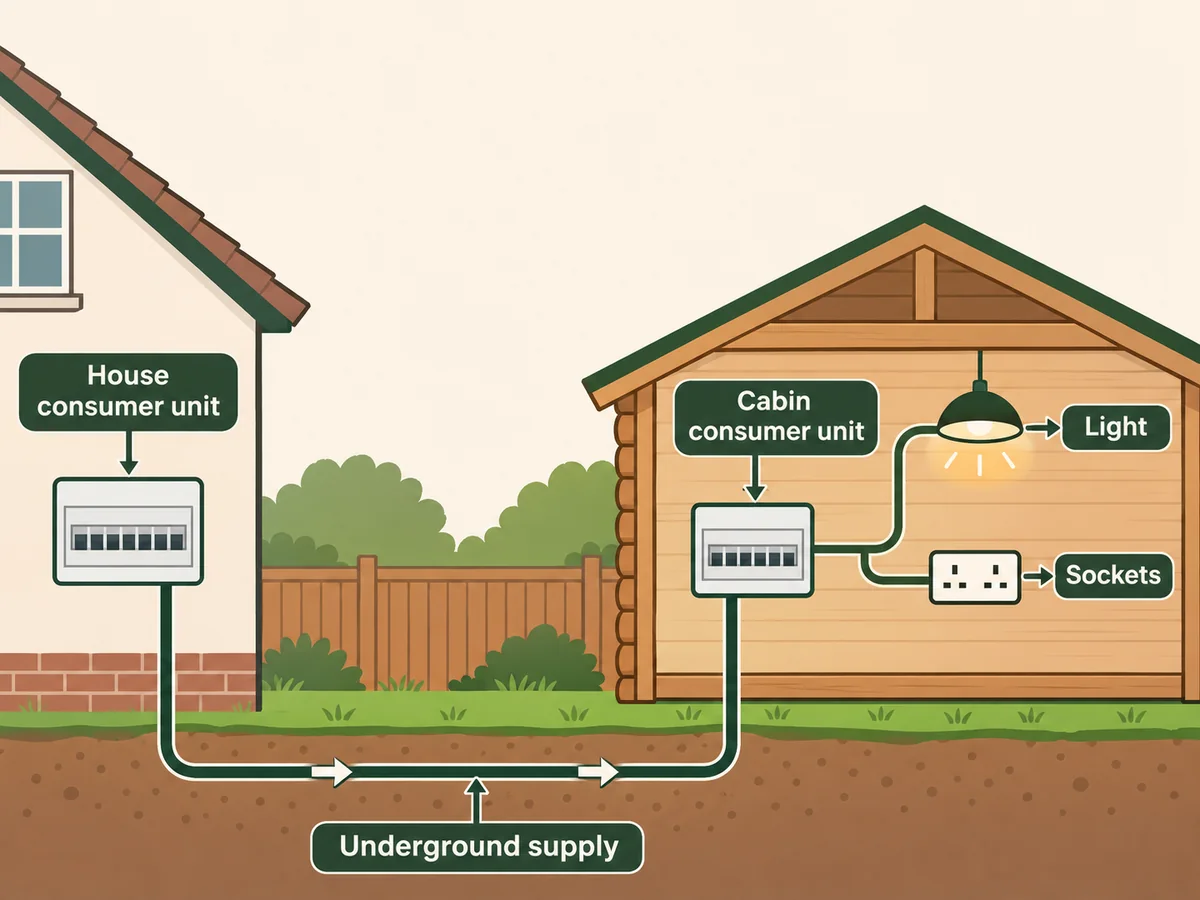
Running power to a garden cabin normally means a new circuit from the house, and often a small consumer unit in the cabin too. So for most cabins the electrics will be notifiable work. If you are not sure, the Planning Portal says to ask your local authority's building control department.
Who can do the work
The building regulations do not restrict who may carry out electrical installation work, but notifiable work has to be checked. The Planning Portal describes three routes:
- A registered competent person. An electrician registered with a competent person scheme can self-certify that the work complies. You do not need to notify building control yourself. This is the route the Planning Portal says is best.
- A registered third-party certifier (England only). Since April 2014, an electrician registered with a third-party certification scheme can inspect and certify work done by someone who is not registered.
- Building control. You make a building regulations application to the council before the work, and building control (usually using a qualified electrician) inspects it. There is a fee.
GOV.UK keeps the list of current competent person schemes, and the Electrical Competent Person Register lets you check whether an electrician is registered. Ask for their scheme name and membership number before they start.
The paperwork you should get
For notifiable work done by a registered electrician, the Planning Portal says you should receive:
- An Electrical Installation Certificate, showing the work has been tested for safety.
- A Building Regulations Compliance Certificate, arranged by the electrician within 30 days of completion, with the local authority notified for its records. If it does not arrive, contact the electrician's registration body.
For smaller non-notifiable jobs, such as adding a socket to an existing cabin circuit in England, a qualified electrician should give you a Minor Works Certificate.
Keep these with your house documents. GOV.UK's building regulations approval page warns that without approval you will not have the certificates you may need when you sell your home.
What the electrician will decide
Your electrician designs the installation to BS 7671. Typical decisions include:
- The supply cable and route. Supplies to garden buildings commonly use a cable designed for burying, such as steel-wire armoured cable, but the type, size, depth and route are the electrician's call. Tell them where the cabin will sit and where drains, pipes and tree roots are.
- Protection. How the circuit is protected at the house and in the cabin.
- Load. What you plan to run: heaters, a kettle, a dehumidifier, gym equipment or a car charger later. Electric heating is often the biggest load, so share your heating plans early (see heating a log cabin).
- Earthing and the cabin board. Whether the cabin needs its own consumer unit.
Get at least two quotes, ask each electrician what is included (trench digging, reinstating the lawn, sockets, lights, data cable) and check they have worked on timber garden buildings before.
Planning permission for electrics
The Planning Portal's electrics planning page says planning permission is not generally required for installing or replacing electrical circuits, but if you live in a listed building you should contact your local planning authority first.
Fitting electrics in a building that settles
Solid log walls shrink and settle, especially in the first year or so. Garden Buildings Direct's timber movement guide lists electrics among the things to check if gaps appear: anything fixed across more than one log can stop the wall moving and force gaps to form. It suggests fixing a vertical timber slat to the wall through slotted holes and mounting things on that instead.
For electrics this means:
- Ask the electrician to mount sockets, switches and the consumer unit on battens or backboards that allow the logs to move, rather than screwing long runs of trunking rigidly across several logs.
- Leave slack in vertical cable runs.
- Avoid fixing anything so it bridges the settling gap above doors and windows.
Mention this at the quoting stage. An electrician used to block-built extensions may not have met settling log walls before.
Plan the electrics before you order the cabin
A little planning saves money and mess:
- Choose the position with the cable in mind. A longer route means more cable and more trench.
- Order the base with a duct. If you are laying a concrete slab, ask the electrician whether they want a duct cast into it for the cable entry.
- Think about security. Dunster House's buyer's guide makes a point of multi-point locking and toughened glass, which matters if you will leave computer equipment in the cabin.
- Plan data. If Wi-Fi from the house will not reach, ask about running a data cable at the same time, in a separate duct.
For the whole fit-out of a working cabin, see best log cabins for a home office.
Sources
Opened and checked on 15 November 2026.
- www.planningportal.co.uk/permission/common-projects/electrics/building-regulations
- www.planningportal.co.uk/permission/common-projects/electrics/planning-permission
- www.gov.uk/guidance/competent-person-scheme-current-schemes-and-how-schemes-are-authorised
- www.gov.uk/government/publications/electrical-safety-approved-document-p
- www.electricalcompetentperson.co.uk
- www.gov.uk/building-regulations-approval
- www.gardenbuildingsdirect.co.uk/blog/log-cabin-timber-movement
- dunsterhouse.co.uk/log-cabins-buyers-guide