Guides · Choosing a cabin
Log cabin wall thickness: 28mm vs 44mm vs 70mm compared
19mm, 28mm, 34mm, 44mm or insulated 62–70mm logs? What each wall thickness suits, what makers say about year-round use and dated UK price differences.
We haven't tested these products. This comparison is based on makers' published specifications and manuals, retailer listings and owner reviews (checked 15 November 2026).
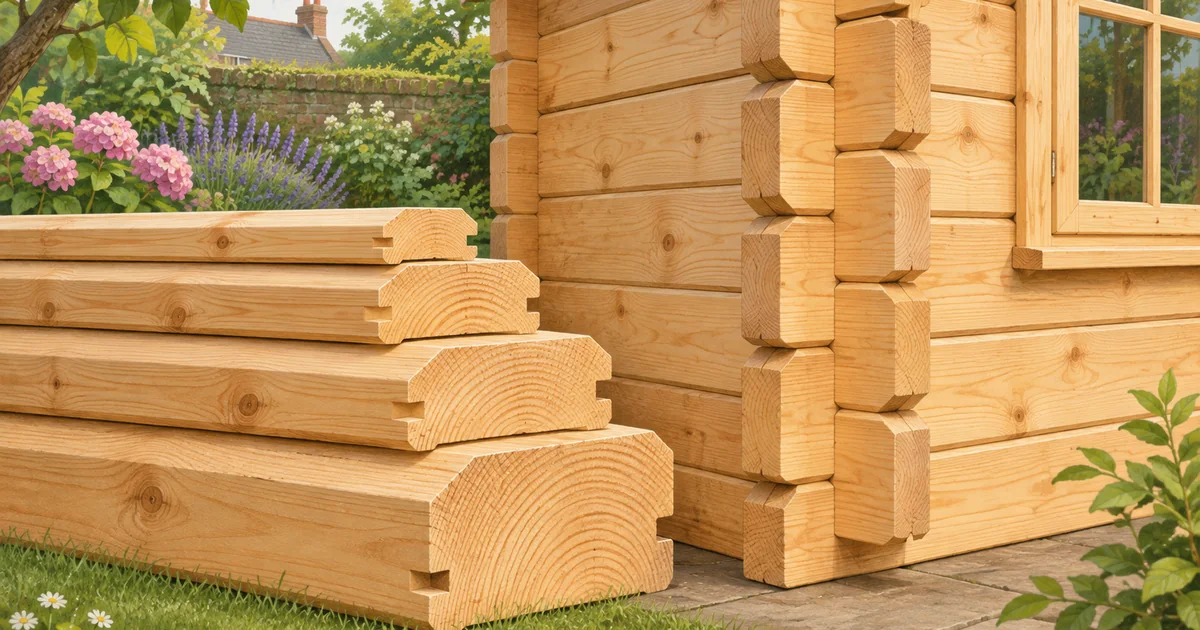
Wall thickness is the first number on almost every log cabin listing, and it drives the price, the weight, how warm the cabin feels in January and how big a building the maker is willing to sell. This guide compares the common thicknesses using makers' own descriptions and same-size prices listed on 15 November 2026.
The short answer
- 19 mm: summerhouse territory. Fine for warm-weather use.
- 28 mm (and 34 mm): spring to autumn, or year-round in mild conditions with a heater.
- 44 to 45 mm: the usual choice for all-season use such as a home office.
- Insulated walls (62 to 70 mm systems): for a cabin you want to heat every day, like a room in the house.
Thicker logs help, but they are only one part of a warm cabin. The roof and floor lose heat too, so a thick-walled cabin with an uninsulated roof and floor will still feel cold. See log cabin insulation kits.
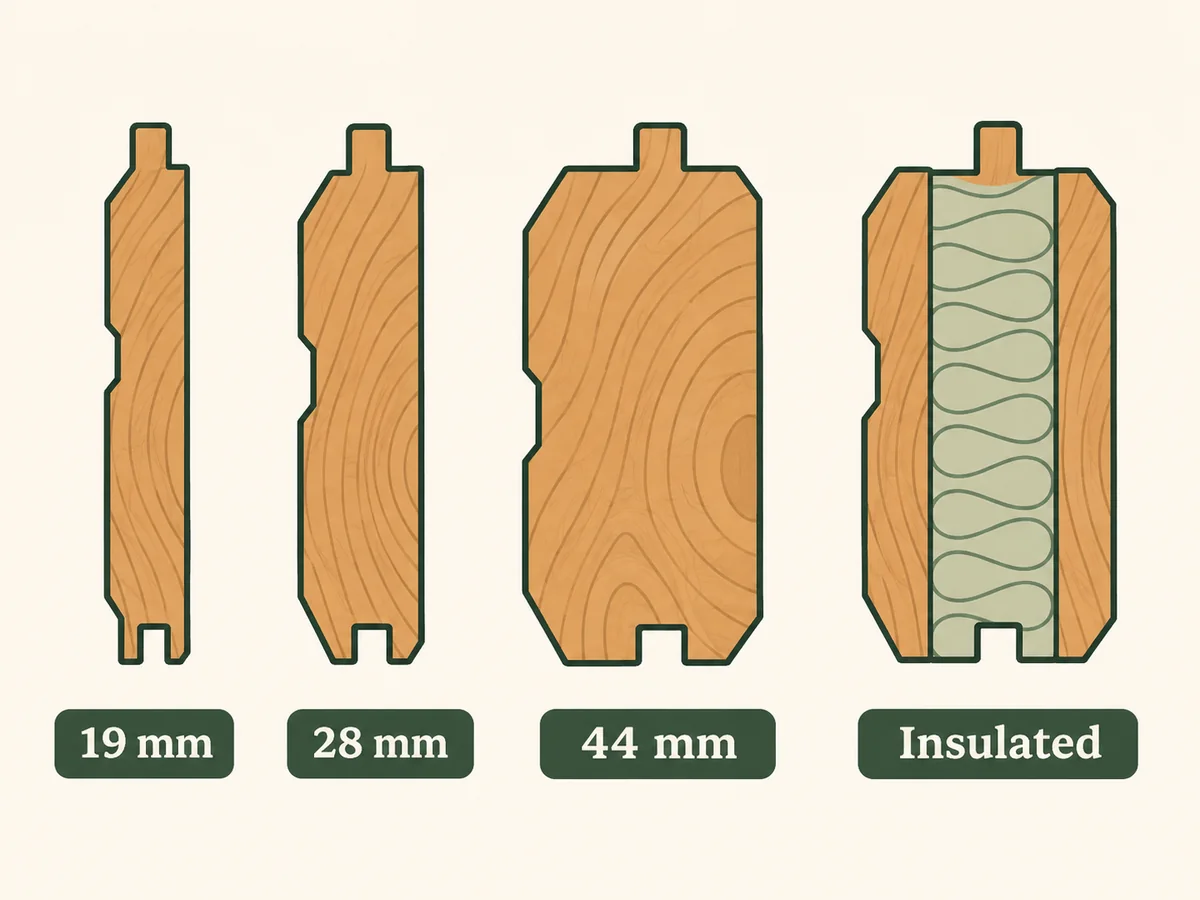
What each thickness is for
Tiger Sheds' buyer's guide gives the clearest maker description of the bands:
- 19 mm cabins "tend to be on the smaller side" and may be adequate if you want to use the cabin as a summer house on warmer days.
- 28 mm gives more robustness and better heat retention; Tiger says these cabins can be used year-round in mild climates but are best suited to spring, summer and autumn.
- 44 mm is described as ideal for use in all seasons, thick enough to help against heat loss in winter. Tiger's 44 mm logs have a double tongue and groove, and it notes that thicker logs allow larger buildings.
Tiger's insulation article recommends 44 mm logs for "an effective, natural level of insulation" in a UK climate.
Dunster House sells 45 mm as its standard wall. Its buyer's guide says that generally the thicker the wall, the better the insulation, but that you may not need the thickest walls, and its product pages state that 45 mm walls "contain over 60% more wood than a 28mm wall". Its insulated Warmalog walls are 62 mm thick: a sandwich of timber and polyisocyanurate (PIR) insulation that Dunster says gives a U-value equivalent to a 140 mm wall.
Other retailers use different steps. Forest Garden sells 28 mm, 34 mm and 45 mm cabins, and Waltons' log cabin range runs from 19 mm to 44 mm, including 40 mm studio cabins. Compare like with like: a 34 mm cabin sits between the 28 mm and 44 mm bands.
Same cabin, different walls: the price gap
The fairest price comparison is the same model and size in two thicknesses. BillyOh's pages list each combination (prices listed at BillyOh, checked 15 November 2026):
| Model and size | 28 mm walls | 44 mm walls | Difference |
|---|---|---|---|
| BillyOh Fraya 4.0 x 2.5 m | £2,797 | £3,618 | £821 |
| BillyOh Fraya 4.0 x 3.0 m | £3,108 | £4,052 | £944 |
| BillyOh Fraya 5.0 x 3.0 m | £4,093 | £5,057 | £964 |
| BillyOh Winchester 4.0 x 2.5 m | £2,756 | £3,609 | £853 |
| BillyOh Winchester 4.0 x 3.0 m | £3,169 | £4,101 | £932 |
On those listings, going from 28 mm to 44 mm added roughly £820 to £965, or about 25 to 30% on these sizes. BillyOh describes its options as "28mm for casual use, 44mm for superior insulation", and only offers uPVC double-glazed doors and windows on the 44 mm build of the Fraya.
Across retailers, the bands look like this (prices listed on each retailer's product page, checked 15 November 2026):
- 28 to 34 mm: Forest Garden's Harwood 3.0 x 2.0 m, 28 mm was listed at £2,444.99 and its Chiltern 4.0 x 3.0 m, 34 mm at £4,758.99.
- 44 to 45 mm: Dunster House listed its Terminator 4.0 x 3.0 m at £2,714.99 and its Terminator 3 x 2 m from £1,959.99. Forest Garden's Mendip 5.0 x 4.0 m, 45 mm was £6,906.49.
- Insulated: Dunster House listed the Terminator 4.0 x 3.0 m with 62 mm insulated walls and uPVC at £5,679.99, and the Severn Apex 5 x 4 m in the same spec at £6,884.99. Tiger Sheds' 70 mm insulated cabins were much dearer: the Galena from £15,294.99 and the Obsidian from £16,948.99, both for the 14 x 10 ft size.
The retailers differ as much as the thicknesses do, so do not read a cheap 45 mm listing as proof that thickness costs nothing. Glazing, roof and floor specification, treatment and delivery all vary between listings.
Beyond the walls: what else changes with thickness
Glazing and doors
A thick wall with thin glazing still leaks heat. Dunster House's buyer's guide recommends looking for 4 mm toughened glass and 28 mm or thicker double-glazed units, and says many cheap cabins come with 14 mm units, which give less sound and thermal insulation. Tiger says all its log cabins have 4 mm toughened glass as standard. Check the glazing line on any listing alongside the wall figure.
Roof and floor boards
Many cabins use 19 mm tongue and groove boards for the roof and floor regardless of wall thickness: Forest Garden's Chiltern and Mendip pages and Dunster House's listings all mention 19 mm roof and floor boards. Some listings offer thicker floorboards as an upgrade, as BillyOh's Fraya page does, so check what the standard floor is. If you plan to use the cabin in winter, budget for roof and floor insulation whatever the walls.
Size and stiffness
Thicker logs are stiffer, which is one reason makers offer their biggest buildings only in thicker walls. Tiger's buyer's guide notes that 44 mm log cabins can be significantly larger.
Settling
All solid log walls settle and move with the seasons. Thicker logs do not stop that; you still need the settling gaps above windows and doors and storm braces that can slide. See log cabin settling and expansion.
How to choose
- Decide the use and the season. Summer-only hobby room: 19 to 28 mm. Year-round office or gym: 44 mm or more.
- Decide how you will heat it. A daily-use office heated all winter is the case for insulated walls; occasional winter use can work with 44 mm plus roof and floor insulation.
- Compare like with like. Same size, same glazing, same roof covering, same treatment.
- Check height as well. Thicker walls do not change the planning rules: the cabin's overall and eaves heights do. Use the log cabin planner.
If you are choosing a cabin for working from home, the best log cabins for a home office guide picks out the wall, glazing and insulation options that matter most for all-day use.
For a wider round-up of current kits by size, see best log cabin kits UK.
Sources
Opened and checked on 15 November 2026.
- www.tigersheds.com/buying-guides/a-buyers-guide-for-choosing-a-log-cabin
- www.tigersheds.com/blog/how-to-insulate-a-log-cabin-tiger-sheds
- dunsterhouse.co.uk/log-cabins-buyers-guide
- dunsterhouse.co.uk/log-cabins/pent/terminator-pent-log-cabin-w3m-x-d2m
- dunsterhouse.co.uk/log-cabins/pent/terminator-log-cabin-w4-0m-x-d3-0m
- dunsterhouse.co.uk/log-cabins/apex/severn-w5-0m-x-d4-0m
- billyoh.com/fraya
- billyoh.com/billyoh-winchester-log-cabin
- www.forestgarden.co.uk/product/harwood-3-0m-x-2-0m-log-cabin-24kg-felt-plus-underlay
- www.forestgarden.co.uk/product/chiltern-4-0m-x-3-0m-log-cabin-double-glazed-24kg-felt-plus-underlay
- www.forestgarden.co.uk/product/mendip-5-0m-x-4-0m-log-cabin-double-glazed-24kg-polyester-felt-plus-underlay
- www.tigersheds.com/product/the-galena-70mm-insulated-log-cabin
- www.tigersheds.com/product/the-obsidian-70mm-insulated-log-cabin
- www.waltons.co.uk/collections/log-cabins